
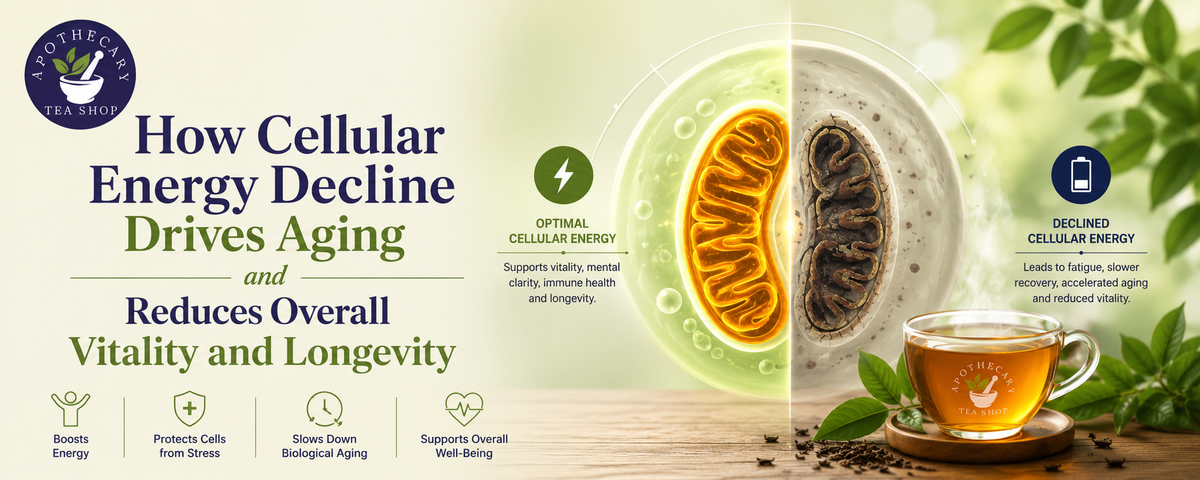
How Cellular Energy Decline Drives Aging and Reduces Overall Vitality and Longevity
Key Takeaways
Cellular energy is what every tissue in your body runs on, and its decline is one of the clearest markers of biological aging.
Energy metabolism slows down gradually starting in your thirties, well before most people notice the change.
Fatigue that doesn't improve with rest often points to declining mitochondrial function, not just poor sleep.
Diet, movement, and specific nutrients can meaningfully slow the aging process at the cellular level.
Apothecary Tea Shop formulates Longevitea around this exact science, supporting cellular energy rather than masking tiredness with caffeine.
What Is Cellular Energy and Why Does It Decline?
Cellular energy is the fuel your cells produce and use to carry out every function in the body, from muscle contraction to brain activity. It comes primarily from ATP, a molecule generated inside mitochondria through a process that becomes less efficient with age.
Production doesn't stop as you get older. It just slows down and produces less output per cell than it used to. Multiply that across trillions of cells and the cumulative effect becomes noticeable, even if no single cell's decline would matter on its own.
This is why cellular energy decline rarely feels sudden. It's a gradual erosion that shows up as reduced stamina long before it shows up on any test result.
How Does Energy Metabolism Change as You Age?
Energy metabolism shifts measurably starting in your thirties, with the rate of decline accelerating after fifty in most people. The body still converts food into usable energy, just with less efficiency and more waste generated in the process.
A few specific changes drive this:
Basal metabolic rate drops roughly 1 to 2 percent per decade after thirty
Insulin sensitivity declines, making glucose conversion into usable energy less efficient
Muscle mass naturally decreases, and muscle tissue is metabolically active tissue
Hormonal shifts, particularly in thyroid and growth hormone levels, slow metabolic processes
Digestive efficiency reduces slightly, affecting nutrient absorption that feeds energy production
None of these changes are dramatic in isolation. Stacked together over a decade, they explain why the same meal or workout produces a different result at forty-five than it did at twenty-five.
What Role Does Mitochondrial Function Play in All This?
Mitochondrial function is the direct engine behind cellular energy, and its decline is one of the most studied contributors to biological aging. Mitochondria convert nutrients and oxygen into ATP, and that conversion process becomes less efficient as mitochondrial DNA accumulates damage over time.
Healthy mitochondrial function depends on the body's ability to repair damaged mitochondria and generate new ones, a process that itself weakens with age. Chronic stress, poor sleep, and a sedentary lifestyle all interfere with this repair cycle further.
A person in their fifties with well-maintained mitochondrial function through consistent exercise and diet can often outperform someone twenty years younger with poor habits, at least in terms of measurable cellular energy output.
Why Does Fatigue Get Harder to Shake as You Get Older?
Fatigue becomes harder to shake with age because the underlying cellular energy supply is lower, so the same demands, work, exercise, stress, draw from a smaller reserve. Rest helps, but it can't fully compensate for reduced production capacity at the cellular level.
Signs this is happening rather than ordinary tiredness:
Fatigue that persists even after adequate sleep
Needing more recovery time after physical activity than in previous years
Afternoon energy crashes that weren't there a few years ago
Reduced mental stamina during long tasks or meetings
A general sense of running on a lower baseline, even on good days
A physical therapist I spoke with sees this constantly in patients recovering from minor injuries. The injury itself heals on schedule, but overall energy takes noticeably longer to bounce back than it did a decade earlier.
How Does Cellular Energy Decline Connect to the Aging Process?
Cellular energy decline is considered one of the recognized hallmarks of the aging process, alongside DNA damage and reduced cellular repair capacity. Lower energy output limits how well cells can maintain themselves, repair damage, and respond to stress.
This creates a compounding effect. Cells with less available energy are less capable of clearing out damaged components, which then accumulate and further reduce energy output. It's a cycle that tends to accelerate rather than stay constant.
Understanding this connection is part of why longevity research increasingly focuses on supporting cellular energy directly, rather than only addressing visible signs of aging after the fact.
What Actually Slows This Decline Down?
Regular exercise, adequate sleep, and specific nutrients that support mitochondrial function are the interventions with the strongest research backing for slowing cellular energy decline. None of these are complicated, but consistency matters more than intensity.
Practical steps with real evidence behind them:
Strength training two to three times a week, which preserves metabolically active muscle tissue
Seven to eight hours of quality sleep, since deep sleep is when most cellular repair occurs
A diet rich in antioxidants, which helps offset oxidative damage to mitochondria
Reduced processed sugar intake, since blood sugar spikes stress mitochondrial function over time
Nutrients like CoQ10 and polyphenols, both studied specifically for supporting energy metabolism
None of this reverses aging entirely. It does meaningfully change the trajectory, and that difference compounds the same way decline does, just in the other direction.
What Should You Look for in Support for Cellular Energy?
Look for a product that names specific compounds tied to energy metabolism, like polyphenols, CoQ10, or resveratrol, rather than one that just promises "more energy" without explaining the mechanism. That distinction usually separates something formulated with intent from something formulated for marketing.
At Apothecary Tea Shop, Longevitea was built around this exact principle. It combines black tea polyphenols, green tea extract, and resveratrol into a formula designed to support cellular energy and mitochondrial function, not just deliver a short-term caffeine lift.
If you're weighing your options, our Best Anti-Aging Supplements lineup breaks down which compounds are included and what each one actually does at the cellular level.
FAQ
1. Is cellular energy decline the same thing as just getting tired more easily?
They're related but not identical. Everyday tiredness can come from sleep, stress, or diet. Cellular energy decline is the underlying biological shift that makes those everyday factors hit harder and recovery take longer than they used to.
2. Can you actually measure cellular energy decline, or is it just a feeling?
It can be measured indirectly through markers like mitochondrial density, VO2 max, and metabolic rate testing. Most people notice the practical effects, stamina, recovery time, mental clarity, well before they'd ever pursue formal testing.
3. Does diet alone fix declining energy metabolism, or does it need exercise too?
Both matter, and neither fully compensates for the other. Diet supplies the raw materials and reduces oxidative stress, while exercise directly signals cells to build more mitochondria. Combined, they outperform either approach alone.
4. At what age should I start paying attention to cellular energy support?
Changes begin gradually in your thirties, so starting supportive habits then makes a measurable difference over the following decades. It's never too late to start, but earlier action compounds more over time.
5. Can supplements alone reverse mitochondrial function decline?
No supplement reverses aging on its own. Nutrients like CoQ10 and polyphenols support the process alongside exercise and sleep, but they work as part of a broader approach, not a standalone fix.
Conclusion
Vitality doesn't disappear overnight. It fades gradually as cellular energy output declines, and most people never connect that fading to anything specific until years have passed.
The encouraging part is that energy metabolism responds to consistent habits, movement, sleep, and the right nutrients working together, more than most people expect.
Explore Longevitea and the rest of the lineup at Apothecary Tea Shop and start supporting your cells at the level where energy and aging actually intersect.