
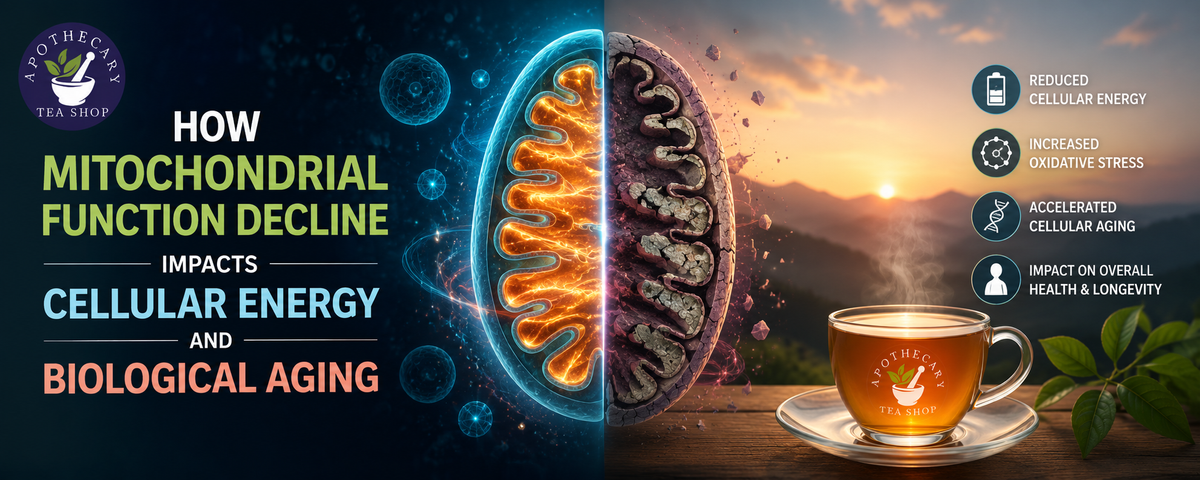
How Mitochondrial Function Decline Impacts Cellular Energy and Biological Aging
Key Takeaways
Mitochondria generate roughly 90 percent of the energy your cells use, so when they slow down, the effects spread everywhere.
Mitochondria aging is normal, but poor diet, chronic stress, and inactivity speed it up more than most people realize.
Mitochondrial dysfunction shows up as fatigue and brain fog long before any blood test picks up on it.
Supporting cellular energy takes consistent daily habits, not a one-time fix or a single supplement.
Apothecary Tea Shop formulates Longevitea specifically around mitochondrial support, not as a caffeine substitute.
What Is Mitochondrial Health and Why Does It Matter?
Mitochondrial health is how well the mitochondria in your cells convert nutrients into usable energy. Since nearly every cell in the body depends on that process, it touches almost everything you do day to day.
People call mitochondria the powerhouse of the cell for good reason. They produce roughly 90 percent of the ATP your body burns for fuel, the same fuel that keeps muscles moving, keeps your brain sharp, and keeps organs running the way they should.
Once mitochondrial health starts slipping, that fuel supply drops with it. Cells keep working, just less efficiently, and that inefficiency adds up across the whole body over time.
How Does Mitochondria Aging Actually Happen?
Mitochondria aging happens because mitochondrial DNA picks up damage over time, and that damage slows down how well mitochondria replicate and function. Unlike DNA in the cell's nucleus, mitochondrial DNA doesn't have nearly as many repair mechanisms built in.
A few things drive this along:
Oxidative damage that accumulates from years of ordinary cellular activity
A gradual drop in the body's ability to generate new, healthy mitochondria
Reduced efficiency in clearing out damaged mitochondria, a process called mitophagy
Falling levels of coenzyme Q10, a compound mitochondria rely on for energy production
Chronic inflammation, which interferes directly with mitochondrial repair
None of this happens fast. It's a slow buildup that only becomes noticeable once enough mitochondria are underperforming at the same time.
What Does Mitochondrial Dysfunction Look Like Day to Day?
Mitochondrial dysfunction shows up as fatigue that doesn't lift with rest, slower physical recovery, and trouble concentrating by the afternoon. People tend to write these off as normal aging or stress, when they're actually tied to lower cellular energy output.
Signs people describe most often:
Waking up tired even after a full night's sleep
Muscle soreness that lingers longer than it used to after a workout
Mental fog that creeps in a few hours into the workday
Less tolerance for physical effort than a few years earlier
Slower healing from minor cuts or colds
A construction foreman I spoke with put it well. He said it felt like running on a lower battery percentage every year, even though nothing else about his life had changed.
How Does Energy Production Decline Affect the Rest of the Body?
When energy production drops, high-demand organs like the brain, heart, and muscles feel it first, since they need the most ATP just to function normally. That's why fatigue and brain fog are often the earliest signs of mitochondrial decline, well before anything else.
Over time, lower energy production also affects how well the body repairs itself. Cells running short on fuel struggle to replicate properly, fix DNA damage, or clear out cellular waste the way they should.
That's part of why mitochondrial health comes up so often in longevity research. It's not just about feeling tired. It's about how well your cells can maintain and repair themselves at a basic level.
What Speeds Up Mitochondria Aging the Most?
Chronic stress, poor sleep, and staying sedentary for long stretches are the three biggest accelerators of mitochondria aging based on what the research currently shows. Each one interferes with a different piece of how mitochondria generate and maintain energy.
Specific factors that push the decline along faster:
Chronic stress, which raises cortisol and increases oxidative damage to mitochondrial DNA
Poor sleep, since deep sleep is when most cellular repair actually takes place
A sedentary lifestyle, which weakens the signal for cells to generate new mitochondria
A diet heavy in processed sugar, which raises oxidative stress on mitochondrial membranes
Smoking and heavy alcohol use, both of which damage mitochondrial function directly
The good part is most of these factors respond well to consistent changes, which isn't true for every aging process the body goes through.
How Can You Support Mitochondrial Health Naturally?
Supporting mitochondrial health naturally comes down to regular movement, enough sleep, and nutrients that actually fuel energy production at the cellular level. None of it requires anything extreme, just doing it consistently.
Steps that make a real difference over time:
Get regular aerobic exercise, since it signals cells to build new, healthy mitochondria
Aim for seven to eight hours of sleep, since that's when cellular repair peaks
Cut back on processed sugar, which lowers oxidative stress on cell membranes
Add antioxidant-rich foods and drinks, since they help offset that oxidative damage
Look into nutrients like CoQ10 and polyphenols, both studied for mitochondrial support
A runner who adds two strength sessions a week alongside her usual cardio often sees better recovery within a few months. Not because she's training harder, but because her cells are producing energy more efficiently than before.
What Should You Look for in a Supplement That Targets Mitochondria?
Look for something that names specific mitochondria-supporting compounds, CoQ10, resveratrol, tea polyphenols, rather than a label that just says "energy support" with nothing behind it. Naming ingredients usually separates a properly formulated product from one that's just marketing.
At Apothecary Tea Shop, Longevitea was built with exactly that in mind. It combines black tea polyphenols, green tea extract, and resveratrol into a formula aimed at supporting mitochondrial function and cellular energy, not just handing you a caffeine spike and calling it a day.
If you're comparing options, our Best Anti-Aging Supplements lineup lays out exactly which compounds are in each blend and why they matter for cellular health.
FAQ
1. Can mitochondrial dysfunction be reversed, or is it permanent once it starts?
It can improve, though not overnight. Consistent exercise, better sleep, and the right nutrients have been shown to measurably improve mitochondrial function over several months, even in people who've had years of gradual decline.
2. At what age does mitochondrial health typically start declining?
Research points to a noticeable drop starting in the thirties, with the pace picking up after fifty. Lifestyle affects that timeline more than age alone does, which explains why two people the same age can feel completely different.
3. Is fatigue always a sign of mitochondrial dysfunction?
Not always. Fatigue has plenty of causes, sleep disorders, thyroid problems, nutrient deficiencies among them. If it's persistent and rest isn't helping, it's worth a conversation with a doctor before assuming it's mitochondria related.
4. Does exercise help or hurt mitochondrial health?
It helps, especially aerobic and resistance training combined. Exercise signals the body to build new mitochondria, a process called mitochondrial biogenesis, which improves how much energy your cells can produce over time.
5. How is mitochondrial health different from just feeling energetic?
Feeling energetic day to day is the surface result. Mitochondrial health is the underlying capacity actually producing that energy. Caffeine can make you feel more awake temporarily, but it doesn't change how efficiently your cells are making fuel.
Conclusion
Fatigue that doesn't respond to more sleep, or recovery that doesn't match your effort, often points back to something happening at the cellular level. Mitochondrial health sits underneath a lot of what people casually chalk up to "just getting older."
The upside is that mitochondria aging responds well to consistent habits, movement, sleep, and the right nutrients working together over time, not a single fix.
Take a look at Longevitea and the rest of the lineup at Apothecary Tea Shop and start supporting your cells where the energy actually gets made.