
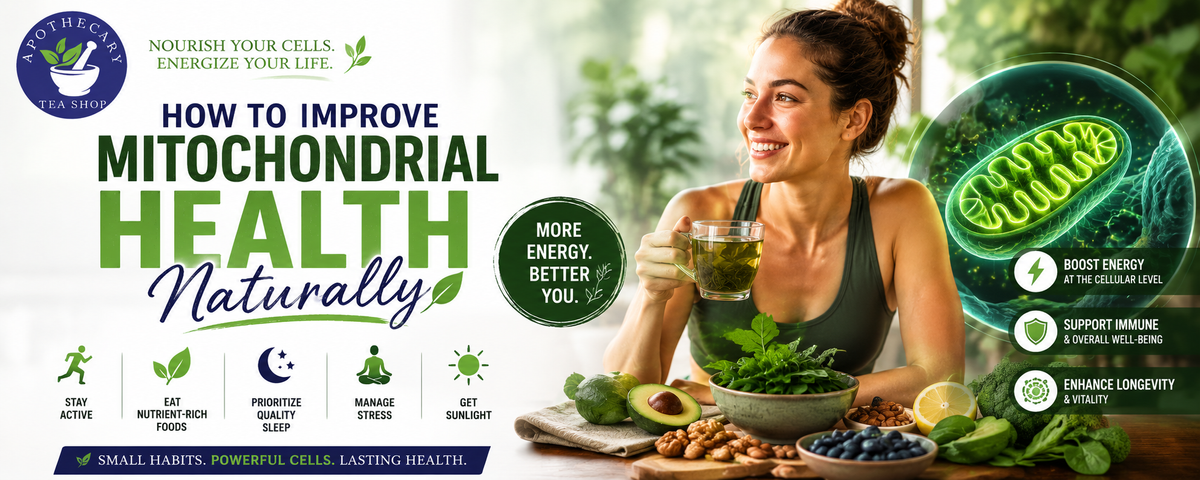
How to Improve Mitochondrial Health Naturally
Key Takeaways
Mitochondria are the energy-producing structures inside your cells
Their function declines with age, affecting energy, focus, and recovery
Diet, movement, sleep, and stress management all directly impact mitochondrial health
Certain herbs and plant compounds support mitochondrial function
Small, consistent habits protect your cells better than any single fix
What Is Mitochondrial Health and Why Does It Matter?
You have probably heard that mitochondria are the powerhouses of the cell. That line comes from a textbook, but it is genuinely accurate.
Mitochondria are tiny structures that live inside almost every cell in your body. Their main job is to take the food you eat and convert it into energy your cells can actually use. That energy is called ATP. Everything your body does, thinking, moving, healing, breathing, runs on ATP.
When your mitochondria work well, you feel it. Your energy is steady. Your mind is clear. Your body recovers from effort without too much trouble.
When your mitochondria are struggling, you feel that too. You are tired for no clear reason. Things take longer to recover from. Focus becomes harder to hold.
Mitochondrial health is not a niche topic for biohackers. It is fundamental to how every person feels and functions, at every age.
The Mitochondria and Aging Connection
Here is something most people do not realise. Aging does not just happen to your skin or your joints. It happens inside your cells first.
The mitochondria and aging connection is one of the most studied areas in longevity science right now. As you get older, mitochondria become less efficient. They produce less energy. They also generate more oxidative stress, a kind of cellular wear and tear caused by unstable molecules called free radicals.
Healthy mitochondria are constantly being recycled and replaced through a process called mitophagy. Think of it like a quality control system. Old or damaged mitochondria get cleared out, and new ones take their place. With age, this recycling process slows down. Damaged mitochondria accumulate. And the cells that depend on them start to suffer.
This shows up in ways you can feel:
Energy levels that are lower than they used to be
Slower physical recovery after exertion
Cognitive sharpness that fades faster than before
Immune response that is not as quick or effective
The good news is that mitochondria are responsive. Unlike some aspects of aging, mitochondrial function can be meaningfully supported and even improved through daily habits.
Mitochondrial Dysfunction Symptoms You Should Recognize
Mitochondrial dysfunction does not announce itself clearly. It creeps in gradually, which is why so many people chalk it up to stress or age and leave it there.
These are the most common mitochondrial dysfunction symptoms worth paying attention to:
Persistent fatigue that sleep does not seem to fix
Mental fog, difficulty concentrating, remembering, or thinking sharply
Muscle weakness or aches that linger longer than expected
Exercise intolerance, feeling wiped out from activity that used to feel manageable
Slow healing from illness, injury, or physical effort
Low mood or motivation without an obvious cause
Sensitivity to cold or trouble regulating body temperature
Some of these symptoms overlap with thyroid issues, poor sleep, and nutritional deficiencies. That is exactly why mitochondrial health is easy to overlook. If several of these feel familiar and have been building gradually, it is worth exploring further with a healthcare provider.
Mitochondria Diet Tips That Actually Work
What you eat directly shapes how well your mitochondria function. This is one area where the science is clear and practical.
Eat more healthy fats. Mitochondria run very efficiently on fat. Foods like avocados, olive oil, eggs, fatty fish, and nuts give mitochondria excellent fuel. These are not foods to fear. They are foods your cells genuinely need.
Load up on antioxidants. Free radicals damage mitochondria over time. Antioxidants neutralise them. Dark berries, leafy greens, broccoli, sweet potatoes, and colourful vegetables are all high in antioxidants. Eat a wide variety and eat them often.
Get enough magnesium. Magnesium is involved in hundreds of cellular reactions, including the production of ATP. Many people are quietly deficient. Good sources include dark chocolate, pumpkin seeds, spinach, almonds, and black beans.
Include CoQ10-rich foods. CoQ10 is a compound that lives inside mitochondria and plays a direct role in energy production. It is found in organ meats, beef, sardines, and spinach. CoQ10 also declines with age, which is one reason many researchers consider it important.
Avoid ultra-processed foods. Refined sugar and processed seed oils promote inflammation and generate excessive free radicals. Both directly burden mitochondria. Reducing these from your diet is one of the most impactful changes you can make.
Try intermittent fasting. Giving your body a break from constant eating triggers mitophagy, that recycling process that clears out damaged mitochondria. A simple 12 to 16-hour overnight fast a few days a week is enough to activate this benefit for most people.
Exercise and Its Effect on Mitochondria
Exercise is one of the most powerful tools for mitochondrial health. Full stop.
When you exercise, your muscles demand more energy. That demand signals your body to make more mitochondria. This process is called mitochondrial biogenesis. You are literally growing new mitochondria through movement.
Both aerobic exercise and strength training support this process, though in slightly different ways. Aerobic activity, walking, cycling, swimming, improves the efficiency of existing mitochondria. Resistance training increases the density of mitochondria in muscle cells.
You do not need extreme workouts. Consistency matters far more than intensity. Thirty minutes of moderate activity most days, combined with two sessions of strength work per week, gives your mitochondria exactly the stimulus they need.
One additional note: spending too much time sitting counteracts even a good workout. Breaking up long periods of sitting with short movement breaks throughout the day genuinely matters for cellular health.
Sleep, Stress, and Your Cellular Energy
Two things destroy mitochondrial health faster than almost anything else: poor sleep and chronic stress.
During sleep, your body does its deepest cellular repair work. Mitochondria are restored, damaged components are cleared out, and energy reserves are replenished. Consistently sleeping less than seven hours disrupts all of this. Over time, it shows up as exactly the kind of fatigue and brain fog associated with mitochondrial dysfunction.
Chronic stress is equally damaging. When your body is under sustained stress, it produces high levels of cortisol. Elevated cortisol increases oxidative stress and suppresses the mitophagy process that keeps mitochondria healthy.
Managing stress is not a soft lifestyle suggestion. It is a direct cellular health strategy. Breathwork, daily movement, time outdoors, and even short periods of quiet without screens all reduce the physiological burden that stress places on your mitochondria.
Herbs, Tea, and Plant-Based Support
Certain plants have been used for centuries to support energy, endurance, and vitality. Research is now catching up with why some of them work.
Green tea contains EGCG, a compound shown to support mitochondrial function and reduce oxidative damage. Ashwagandha helps regulate cortisol, which protects mitochondria from chronic stress damage. Rhodiola rosea improves how efficiently cells produce and use energy. Turmeric contains curcumin, which reduces mitochondrial inflammation and supports the recycling of damaged mitochondria.
We at Apothecary Tea Shop believe that what you drink every day matters. A thoughtfully blended energy boosting tea that brings together these kinds of herbs is one of the easiest, most enjoyable habits you can build into your daily routine.
Beyond tea, a few other plant-based additions worth considering:
Resveratrol, found in red grapes and berries, activates sirtuins that protect mitochondria
Alpha lipoic acid, found in spinach and broccoli, acts as a mitochondrial antioxidant
Berberine, found in certain herbs, supports mitochondrial biogenesis similarly to exercise
None of these replace the fundamentals. But combined with good sleep, movement, and diet, they give your cells genuine additional support.
FAQs
Q1: Can mitochondrial health actually be improved, or is the decline just part of aging?
It can absolutely be improved. Unlike some aspects of aging, mitochondrial function responds directly to lifestyle. Exercise, diet, sleep, and stress management all have measurable effects on how well mitochondria work, regardless of age.
Q2: How long does it take to notice improvement in energy after making these changes?
Most people notice a meaningful difference in energy and mental clarity within four to eight weeks of consistent changes. Sleep and exercise tend to show results fastest. Dietary shifts take a little longer but tend to be more lasting.
Q3: Are CoQ10 supplements worth taking for mitochondrial health?
CoQ10 is one of the better-researched supplements for mitochondrial support. It tends to be more relevant for people over 40, since natural levels decline with age. It is worth discussing with a doctor, especially if you take statins, which are known to deplete CoQ10.
Q4: Is brain fog always related to mitochondrial dysfunction?
Not always. Brain fog has many causes, including poor sleep, thyroid issues, and nutritional deficiencies. But mitochondria supply energy to brain cells, so when they underperform, cognitive clarity is often one of the first things affected.
Q5: Can children or younger adults have mitochondrial dysfunction?
Yes. While age-related decline is the most common cause, mitochondrial dysfunction can affect people of any age due to poor diet, chronic stress, environmental toxins, or, in rare cases, genetic conditions. The lifestyle strategies in this article are beneficial at any age.