
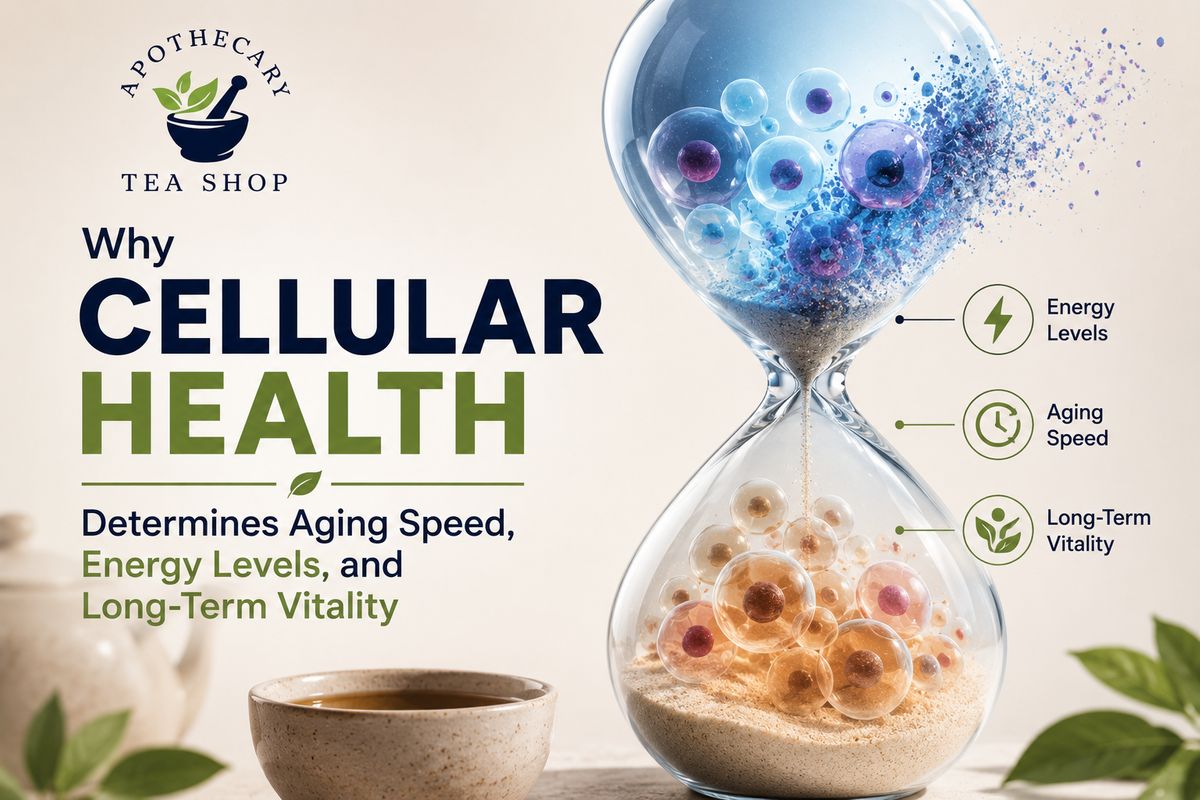
Why Cellular Health Determines Aging Speed, Energy Levels, and Long-Term Vitality
Objective
Explain why cell health underlies aging speed, energy, and long-term vitality, using a clear, evidence-grounded look at how cellular function actually changes over time.
Key Takeaways
Cell health is the foundation everything else is built on: energy, immunity, and how fast you age all trace back to it
Mitochondria generate your cellular energy, and their output drops as you get older
Oxidative stress is the main reason cellular function declines over time
Healthy aging comes down to limiting cell damage and supporting repair
No single habit or supplement covers this. It's the accumulation of daily inputs that shapes long-term cell health
What Is Cell Health and Why Does It Matter?
Cell health is how well your cells do their basic jobs: making energy, repairing damage, and passing signals between one another. This is also why many of the best anti-aging supplements focus on supporting cellular function rather than simply addressing visible signs of aging.
Three things define it in practical terms:
Energy production — how efficiently a cell turns nutrients into usable fuel
Repair capacity — how well damage gets fixed before it piles up
Cell signaling — how clearly cells communicate to keep tissues working in sync
When all three hold steady, you feel it as consistent energy and quick recovery. When one slips, you usually notice the effect before you can explain the cause.
How Does Cellular Function Change as You Age?
Cellular function starts declining at the mitochondria, the structures inside each cell responsible for producing energy. Their output drops with age, and that drop is where most of the visible signs of aging actually begin.
Here's roughly how it plays out:
Mitochondria become less efficient at converting nutrients into usable energy
Cells have less fuel available for normal function
That shortfall shows up as fatigue, slower recovery, or a mental fog that wasn't there ten years ago
None of this happens overnight. Most people chalk it up to being busier or simply older, when the actual cause is happening quietly, inside individual cells, long before it's noticeable in daily life.
What Actually Damages Cells Over Time?
Oxidative stress does most of the damage. It happens when free radicals, unstable molecules produced as a natural byproduct of energy production, accumulate faster than the body can clear them.
Left alone, free radicals damage:
Cell membranes, disrupting how nutrients get in and waste gets out
Mitochondrial structures, cutting energy output further
DNA, which affects how well cells repair and replicate themselves
Diet, chronic stress, and pollution all add to this load. None of them create oxidative stress from scratch. They pile on top of what your body is already managing from ordinary metabolism.
What Are the Real Signs of Declining Cell Health?
Most people feel the symptoms long before they connect them to cellular function. That's not a failure of attention. These signs are subtle on their own and easy to explain away individually.
Persistent low energy that isn't tied to sleep or diet changes
Slower recovery from workouts, a cold, or even a demanding week at work
Mental fog where concentration used to come easily
Visible aging changes, including skin texture, joint stiffness, and slower healing from minor cuts or bruises
None of these arrive suddenly. They build over months and years, which is exactly why cellular health tends to get overlooked until reversing it takes real effort.
What Supports Healthy Aging at the Cellular Level?
Healthy aging comes down to two jobs: limiting the damage cells absorb, and backing the processes that repair them. Antioxidants cover the first job. A smaller set of specific compounds covers the second.
Antioxidants neutralize free radicals before they reach mitochondria and DNA
NAD+ support, through precursors like NRC, helps maintain the energy and repair processes that decline naturally with age
Polyphenols, including the ellagic acid found in pomegranate extract, bring both antioxidant and anti-inflammatory activity to the cellular level
Steady sleep and lower chronic stress reduce the ongoing oxidative load your cells are already handling
Apothecary Tea Shop as leading provider of Best Anti-Aging Supplements built Longevitea around this exact combination, pairing NRC with pomegranate extract and green tea so the antioxidant and mitochondrial support come from one daily habit instead of three separate ones.
What Should You Look for in a Cell Health Supplement?
Not every antioxidant blend addresses the same part of the problem. Check what a product is actually designed to do before assuming it covers cellular health across the board.
Mitochondrial support ingredients — look specifically for NAD+ precursors like NRC, not a generic antioxidant blend
Polyphenol variety — resveratrol and ellagic acid work through different mechanisms, so a mix covers more ground than one compound alone
Antioxidant density — green tea extract and black tea polyphenols both contribute meaningfully here
A format you'll actually use daily — consistency does more for cell health than any single high-dose serving
Clear ingredient sourcing — the label should name specific compounds and amounts, not a vague proprietary blend
Cellular Health Habits: What Helps vs What Doesn't
| Habit | Effect on Cell Health |
|---|---|
| Chronic sleep deprivation | Raises oxidative stress, slows repair |
| Regular antioxidant intake | Reduces free radical damage over time |
| High processed food intake | Adds to cellular inflammatory load |
| Consistent, moderate exercise | Supports mitochondrial efficiency |
| Chronic unmanaged stress | Speeds up oxidative damage |
| NAD+ precursor support (e.g. NR) | Backs declining cellular energy production |
FAQ
1. Can cellular aging actually be reversed?
Not fully. You can slow the rate of decline and support the repair processes your cells already run, but reversing aging at the cellular level isn't something current research can back up.
2. Why am I more tired than I used to be, even with the same amount of sleep?
Mitochondrial efficiency drops with age, so your cells pull less usable energy from the same sleep and food. It's a gradual shift, not a sudden one, which is why it's easy to miss until it's noticeable.
3. Do antioxidants handle cell health on their own?
They cover one piece of it, protection from damage, but energy production and repair depend on other factors too, NAD+ levels and consistent sleep among them.
4. How long before I'd notice a change in energy or recovery?
Most people supporting cellular health through diet or supplements see gradual shifts over several weeks, not days. Repair processes at the cellular level work incrementally, not instantly.
5. Does Longevitea replace eating well and sleeping properly?
No. It's built to sit alongside those habits, adding antioxidant and mitochondrial support rather than substituting for the basics.
Conclusion
Cell health isn't an abstract wellness idea. It's the actual mechanism behind how fast you age, how much energy you have, and how well you recover day to day. Protecting it means cutting down on oxidative damage and giving your cells' existing repair systems what they need to keep up.
If you want a simple way to build that support into your routine, Longevitea pairs NAD+ support with antioxidant-rich botanicals in one glass. For more on the science behind it, read how cellular health impacts longevity.